 Parolingo
A routine, not a resolution
Daily Italian practice that fits in ten honest minutes.
Most Italian doesn't slip away in a dramatic moment. It fades between lessons. Parolingo turns the spare minutes of your day into focused repetition: real exercises, a short mission suggested by the Prof, and mistakes you can actually see and come back to.
Sign-in is needed to save missions and progress. Exercises adapt to your level; Free and Pro access differ — see pricing.
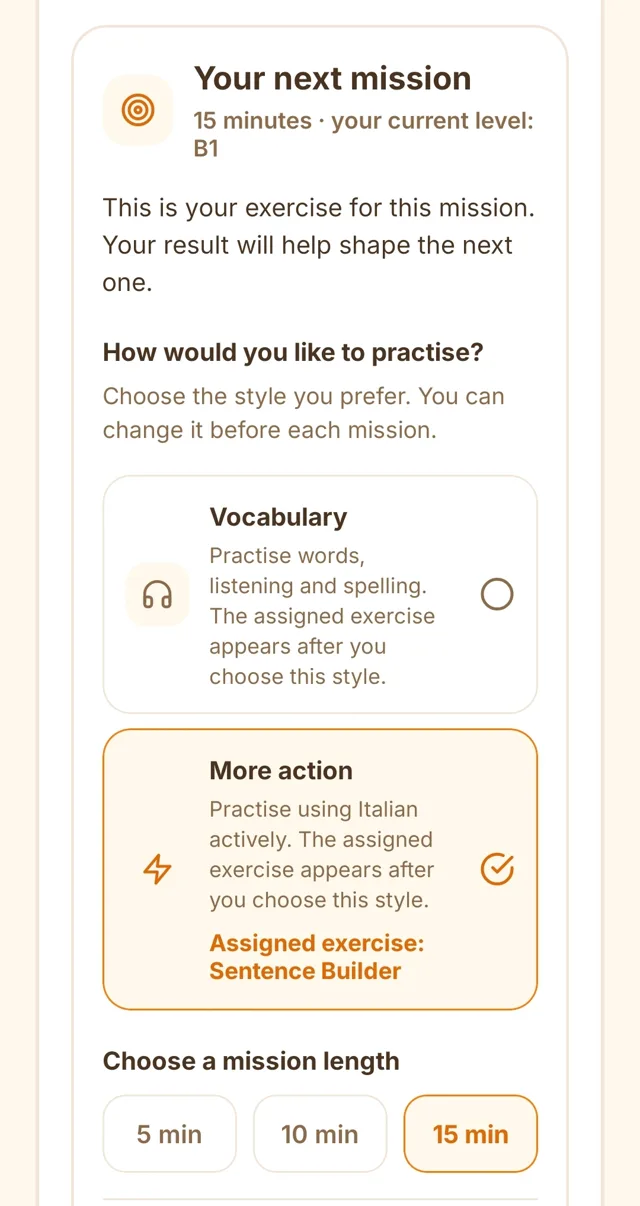
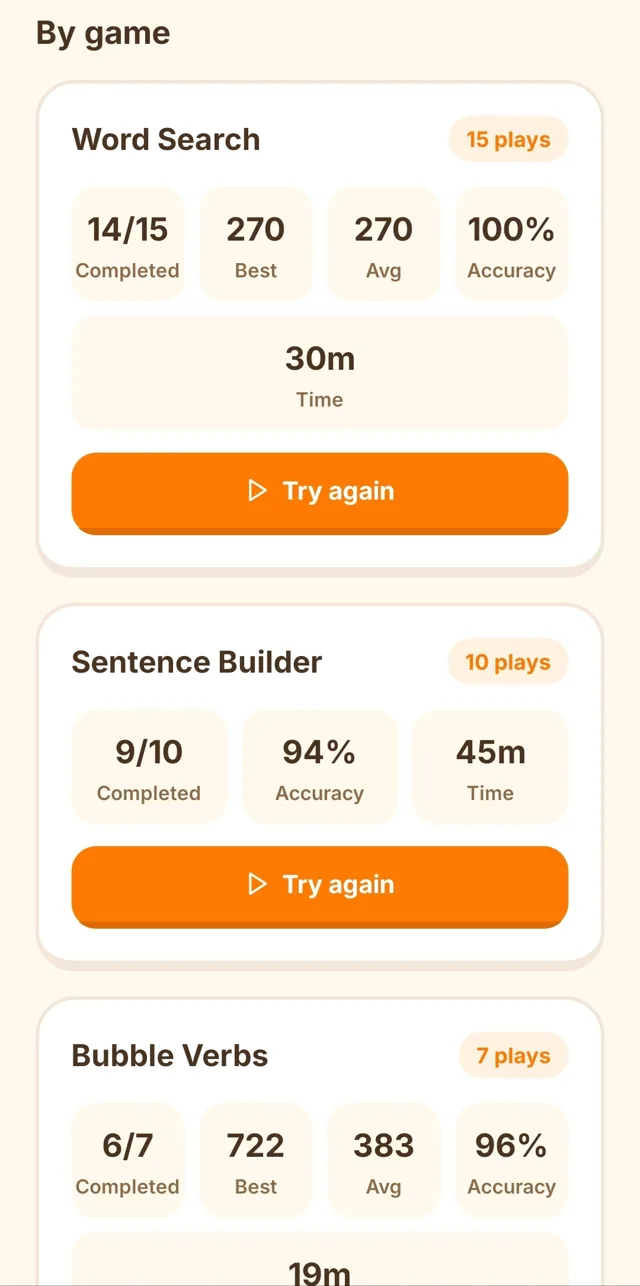
Your Italian study routine
How to practise Italian for 10 minutes a day without drifting
Ten minutes works when the minutes have a shape. Here is the structure we suggest: warm up, build, fix, close. Swap the exercises around as you like — keep the order.
- 0–2 min
Warm up on words
One quick vocabulary round. A word search is ideal: low pressure, eyes on spelling, brain switched to Italian.
- 2–6 min
Build sentences
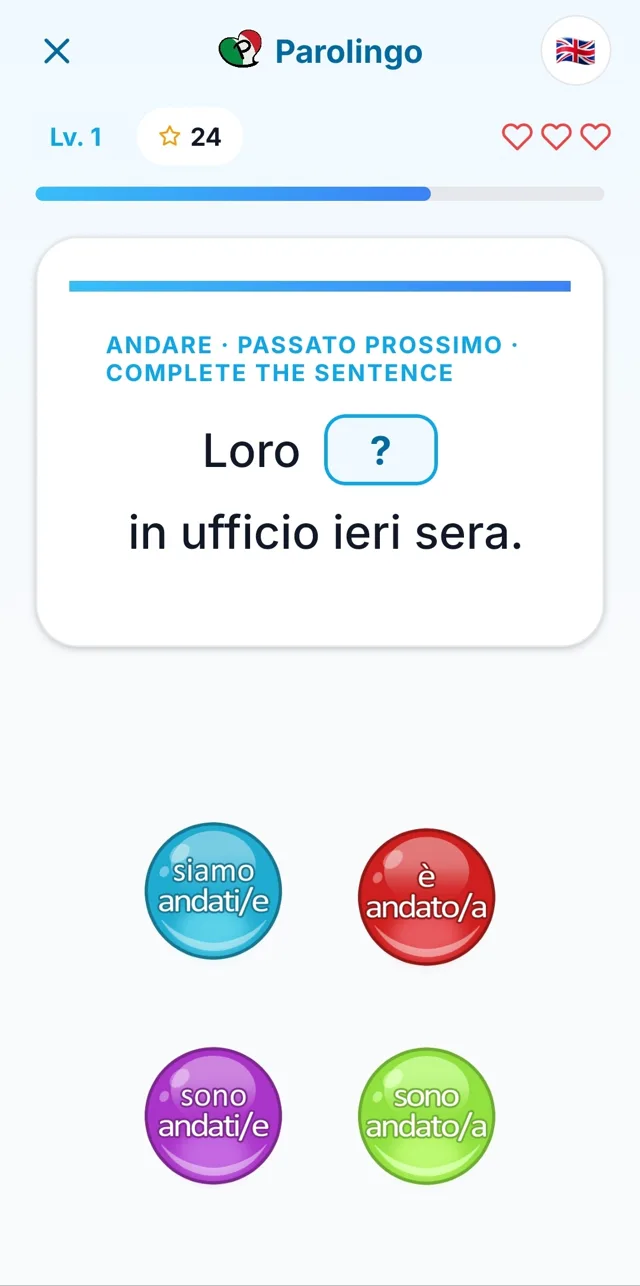
Put words in order, complete a sentence, conjugate a verb. This is where grammar becomes something your hands know.
- 6–9 min
Fix one mistake
Open what went wrong today or yesterday. Read the correct form aloud once. Redo it, don't just reread it.
- 9–10 min
Close the loop
Check your progress and leave yourself a reason to come back: the mission you'll pick up tomorrow.
What the minutes look like
Real exercises. A Prof who suggests what's next.
You shouldn't have to decide what to study every morning. That decision is where most routines quietly die.
Open the app, see the plan
The Prof proposes a short mission based on your level and what you've been practising. You can follow it or choose your own exercises — the point is that the first step is already decided.
- Missions are saved to your account once you're signed in
- Suggestions are a nudge, not a curriculum: your teacher or course still leads
- Short enough to finish on a bus ride or a coffee break
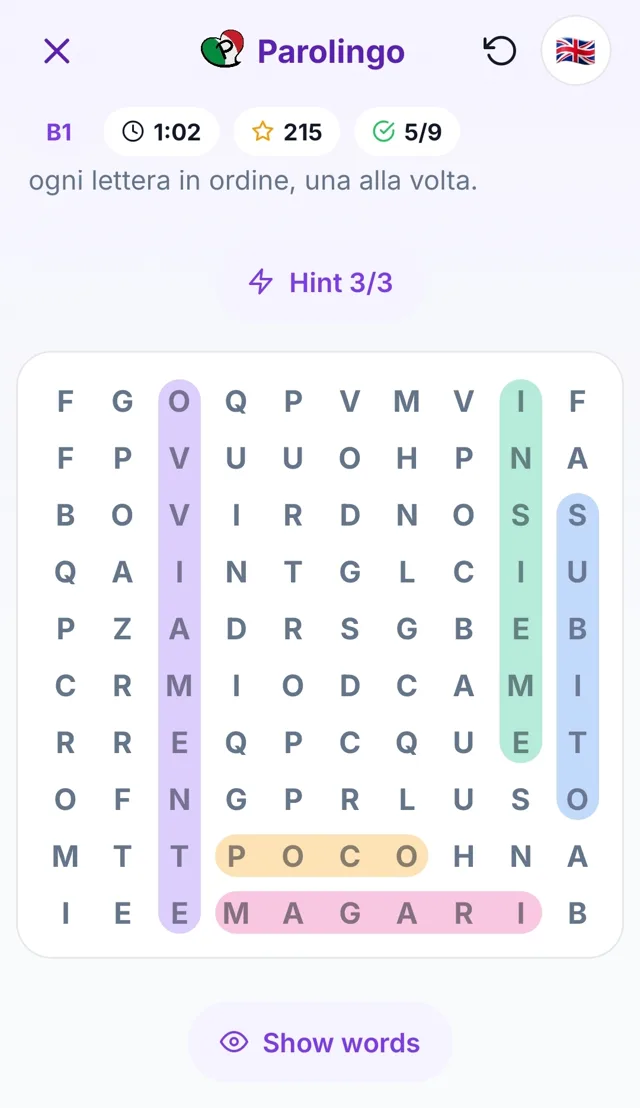
Two minutes of spelling attention
Scanning a grid for finestra or sempre makes you look at every letter. It's a gentle way to get into Italian before the harder work.
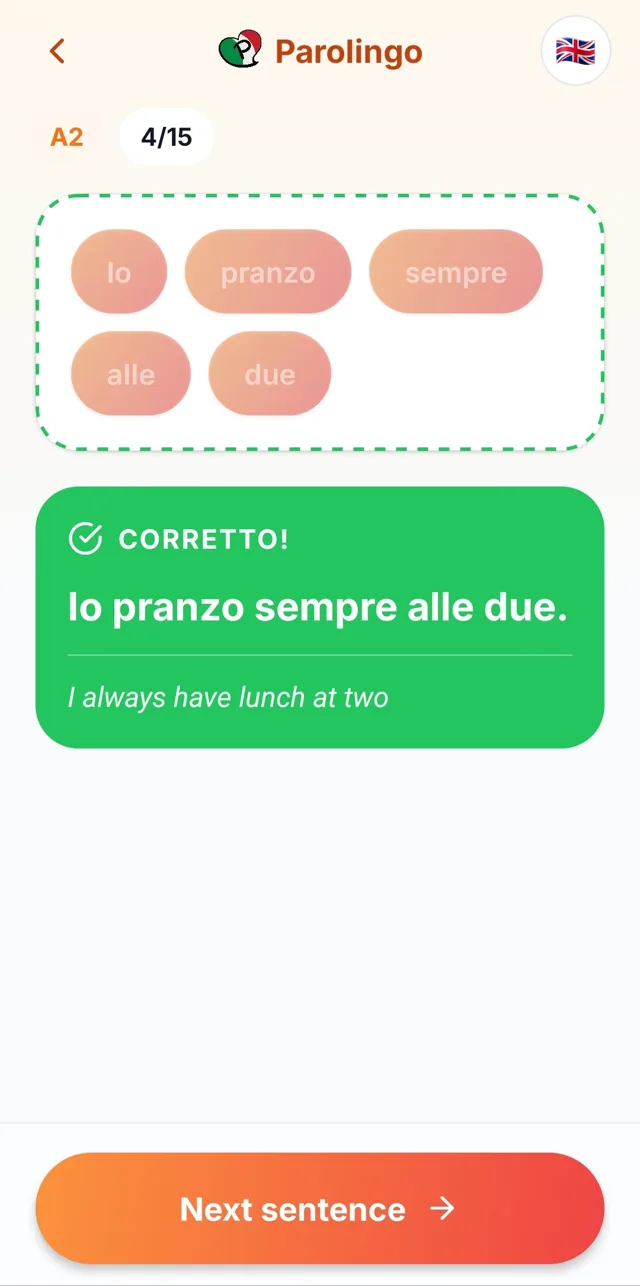
Word order, out loud in your head
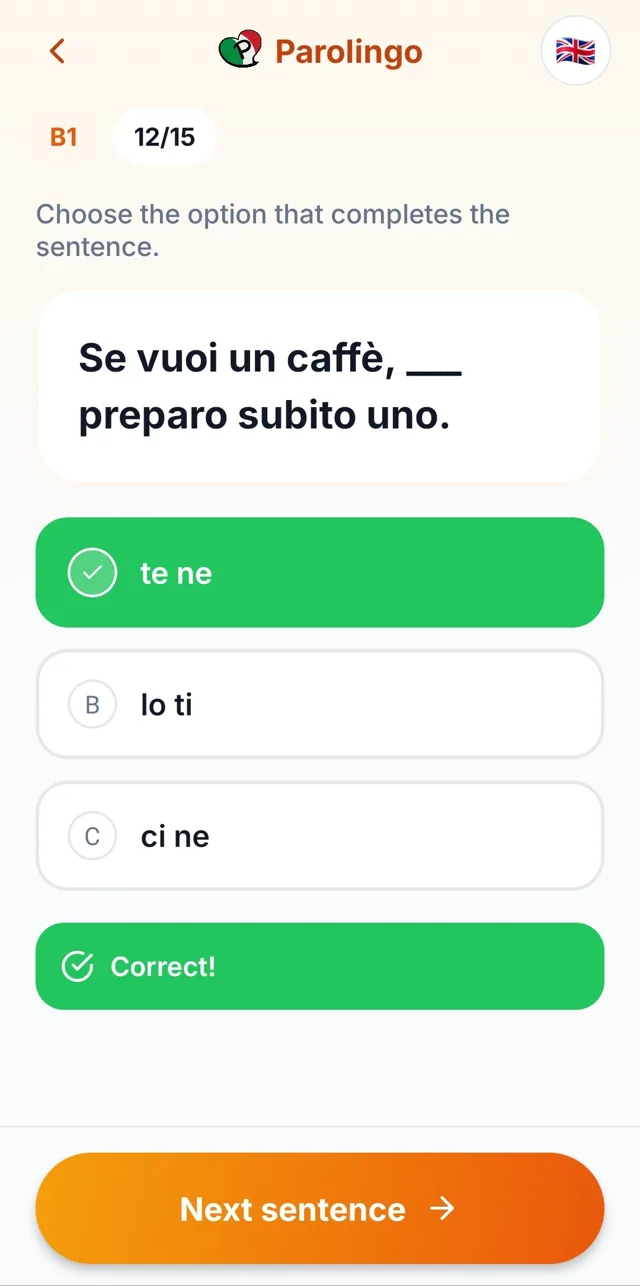
Arranging tiles forces the questions a textbook lets you skip: where does the pronoun go, which comes first, does the adjective agree? Each answer is checked, so you know right away.
Review Italian mistakes
Mistakes are the most useful part of your day.
An app that only shows streaks and confetti hides the most valuable information you produce. Parolingo keeps your wrong answers visible, so you can return to them on purpose.
A typical slip, and the fix
Ieri sono andato al cinema con le mie amiche e abbiamo visti un film.
Ieri sono andato al cinema con le mie amiche e abbiamo visto un film.
With avere, the past participle normally doesn't agree with the subject. Written example for this page.
A three-step review habit
- 1Look before you redoRead the correct version first and name the rule in your own words: agreement, preposition, tense.
- 2Redo, don't rereadRecognising the right answer is not the same as producing it. Do the exercise again from scratch.
- 3Bring patterns to classIf the same slip keeps returning, that's a perfect question for your teacher or conversation partner.
Verbs giving you trouble? Bubble Verbs drills conjugations in short bursts.
Mix the exercises
Vary the task, keep the habit
Repetition works better when the format changes. A few of the exercises you can rotate through:
Track Italian practice
See the routine, not just the streak
Tracking matters because memory is unreliable: a busy week feels like you practised more than you did, and a good week feels like nothing. Your progress page shows what you actually did.
Progress reflects practice. It doesn't move you up a level automatically or certify anything.
A sample week
One way to spread seventy minutes
Ten minutes, seven days. Adjust it to your lessons: lighter the day of class, a little more review the day after.
The honest version
What ten minutes a day can and can't do
It keeps Italian warm
Short, regular repetition helps vocabulary and structures stay within reach between lessons.
It won't replace conversation
Speaking with people, a teacher or a course does things an app can't. Parolingo is the practice in between.
No fluency promises
There's no fixed number of days to fluency. Your starting level is a suggestion, and nobody gets promoted automatically.
Access depends on your plan
Some exercises and features differ between Free and Pro. Details on the pricing page.
Questions
Daily practice, answered
Is 10 minutes a day really enough to practise Italian?
Enough to keep what you're learning active and to spot recurring mistakes, yes. On its own it won't take you to fluency; it works best alongside lessons, reading and conversation.
Do I need an account?
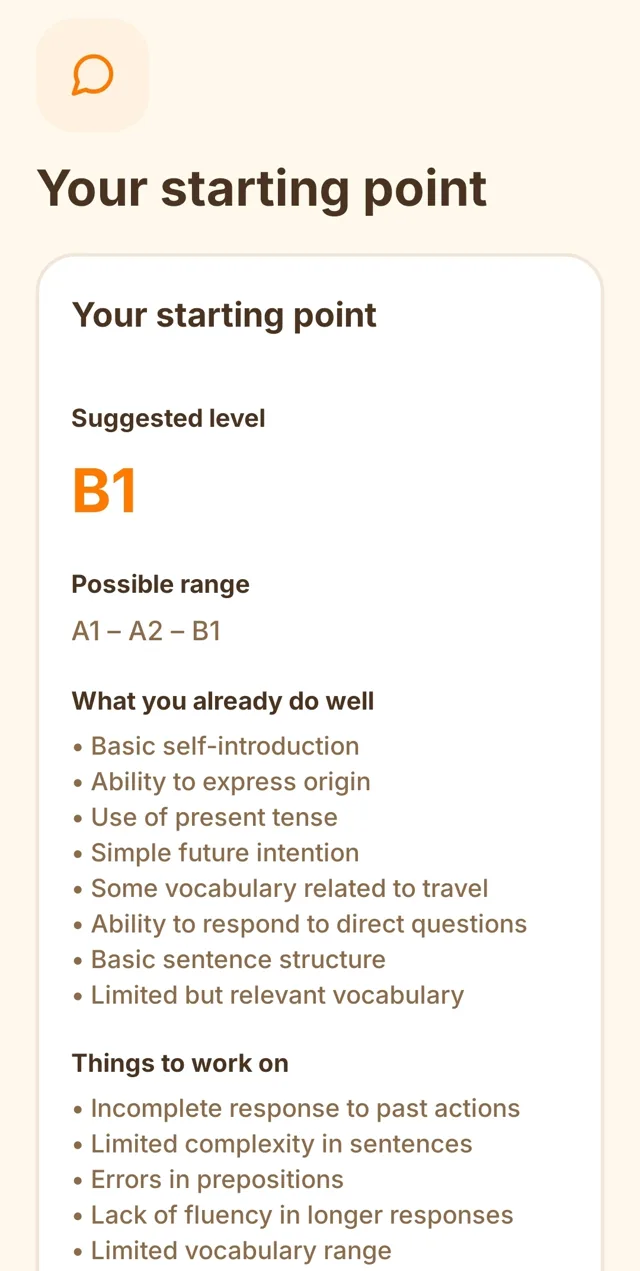
You need to sign in for missions and saved progress. Signing in starts with a short starting-point check so exercises match your level.
Is the starting level an official certification?
No. It's a suggestion to pick suitable exercises. It isn't equivalent to a CEFR exam or any certificate.
Is everything free?
Not everything. Free and Pro accounts have different access. Check the pricing page for current details.
How should I review my Italian mistakes?
Read the correct form, name the rule, then redo the exercise instead of rereading. If a mistake repeats, take it to your teacher.
Start tomorrow's ten minutes today.
Find your starting point, take the first mission, and leave a mistake or two to review tomorrow.
Looking for a broader overview of the exercise formats? Our partner school Accademia Studio Italia has an overview of Parolingo's learning games, and if you'd like a teacher alongside your daily practice, see their online Italian courses.